Tuesday, January 02, 2007
From an interview with Al-Maliki in WSJ: "Nouri al-Maliki: What is happening in Iraq is a war of gangs and a terrorist war. That is why it needs to be confronted with strong force and with fast reaction." It is amazing (or probably not) that the language of current leaders of Iraq sounds like the language for the previous regime. (thanks John)

I wonder whether Walid Jumblat is asked about that during his apology tours of the US. "The Ministry of the Displaced was responsible for the return of about 40,000 families to 157 villages in the Mount Lebanon range. Although Christians and Druze warmly hugged and made up in nationally televised ceremonies, the rate of return is estimated today at about 17%."
I guess that "liberation" has to be repeated sometimes: "A promising Iraqi province is now a tinderbox: Violence surged after U.S. forces handed security to the Iraqis. Now the Americans are stepping back in."
When you think about the crowds that gather for pilgrimage every year in Mecca: what a potentially powerful political force. Mecca itself, and even the Ka`ba area, were a site for battle in Islamic history. It was shelled several times, and the Qaramitah moved the (black stone and tried to move the) Ka`bah itself. Their revolutionary fighters chanted around (and against) the Ka`bah:
فلو كان هذا البيت لله ربنا لصب علينا النار من فوقنا صبًا
لأنا حججنا حجة جاهلية محللة لم تبق شرقًا ولا غربًا
وإنا تركنا بين زمزم والصفا جنائز لا تبغي سوى ربها ربا

Draw your own conclusions. Isma`il Haniyyah, the Hamas prime minister, met with King `Abdullah in Saudi Arabia after expressing his strong desire for the meeting in the press. Two days ago, a private Saudi jet arrived in Beirut; it then returned to Saudi Arabia with Na`im Qasim (deputy secretary general of Hizbullah) and Muhammad Fnaysh (the Hizbullah minister who resigned). The two met with the King. Also, the Egyptian ambassador in Lebanon met with Hasan Nasrallah. According to the minutes (partial) of the meeting published in As-Safir today, the ambassador carried a letter from Husni Mubarak and salutations from `Umar Sulayman.
"An online column last week in the left-leaning Nation magazine, which railed against Mr. Ford’s pardon of former President Nixon, commended President Bush for being “appropriately respectful” toward Mr. Ford."
Here, NYT Baghdad fortress chief, John Burns, explains the encounter between the White Man and the Wog: "I came to understand how a Westerner used to the civilities of democracy and due process — even a reporter who thought he grasped the depths of Saddam’s depravity — fell short of the Iraqis’ sense, forged by years of brutality..." (Here, he explains how he felt sorry for Saddam. Notice that when the White Man feels sorry for Saddam, he/she is called "sensitive, compassionate, and civilized." But if the wog feels sorry for Saddam, he/she would called a brutal backward terrorist.)
"Al-Umari was arrested twice during the war on suspicion of censorship violations. "I revealed the terrible secret," he laughs, "that Kfar Yassif is located east of Akko. It of course ended in nothing. Israel did not achieve its aims and Hezbollah continued to fire rockets, so they started to go after the journalists." At a symposium that the Channel 2 franchisee Reshet held in Umm al-Fahm a month ago, al-Umari criticized the functioning of the Israeli media during the war. "Some of the media," he argued, "sounded just like the chief of staff.""
Sunni Versus Shi`ite: on live TV. Today, on live TV, the state of Sunni-Shi`ite relations was exposed for all to see on Al-Jazeera's Al-Ittijah Al-Mu`akis. The host invited Mish`an Al-Jabburi (a former henchman for Saddam who later supported the invasion of Iraq) and another person who is not well-known but was expected to represent the "Shi`ite" point of view. The premise was fraught with tensions of course. The topic was Saddam's execution. Within minutes, the show degenerated into obscene exchanges and the two guests actually physically got into an altercation. The "Shi`ite guest" stormed out of the studio within minutes after he was accused of being an Iranian who actually had changed his name (he admitted later after he returned to the studio that he had indeed changed his name after being stripped of his citizenship by Saddam). Al-Jabburi (who was one of the first to profit from the massive corruption of the occupation--they all seem to have embezzled and bought houses in Amman, London, and Lebanon) heaped praise on Saddam and hailed the resistance although he used to appear on TV to support the occupation of Iraq. But the real thrust of the debate was made clear early on when the two--both of them--engaged in blatant hateful, sectarian vitriol. They resorted to the names of heroes and villains of Sunni and Shi`ite history to insult one another. It was exciting TV until you realize that their encounter is reflected in the blood on the streets of Iraq. And what is this with the Saudi-led campaign to refer to Shi`ites and to Iranians as "Safavids". The Saddamist Ba`thists started that and now it is commonly used by anti-Shi`ites in the Arab world. Walid Jumblat and the other sectarian forces of March 14th movement are now using it. They use Safavid as a pejorative word. Do they know about the Safavid dynasty and the great achievements under its rule? "In 1666, Isfahan, according to a European visitor, had 162 mosques, 48 colleges, 182 caravansaries, and 273 public baths, allmost all of them erected by `Abbas I and his successor, `Abbas II (1642-66)." (Ira M. Lapidus, A History of Islamic Societies, (Cambridge: Cambridge University Press, 1988), p. 294). Incidentally, this book is far superior to Albert Hourani's History of the Arab Peoples. Hourani once told us, while he was still working on it, that he intended it as a corrective to Hitti's major history of the Arabs especially because Hitti treated the beginning of the Ottoman era as mark of dramatic decline of the Arabs. But Hourani's final product is, in my opinion, quite disappointing, and he did not want to upset anybody at the end of his career, so even on the Arab-Israeli conflict section, he did not want take a stand, and offered words of praise for the "Mandate" colonialism of the East. The books also feel rushed. Personally, our criticisms of classical Orientalism notwithstanding, and aside form clear methodological problems, I still like Philip Hitti's History of the Arabs. It is a very good read. Hitti knew how to spice up the narrative with the most interesting details. I always mention the section when, in talking about the splendor and ostentation of Baghdad in the classical Islamic period, he talks about one royal dinner that featured the tongues of fish as the delicacy. Where was I? Oh, the Safavid dynasty. Of course, I don't want to glamorize the Safavid dynasty; after all. There was a brutal imposition of Shi`ite Islam on the lands under its rule. That--not Islam as commonly assumed in Western writings (see Richard Bulliet, Conversion to Islam in the Medieval Period)--was conversion by the sword.
 By the way, Saddam Husayn established a very close relationship with Jalal Talbani (shown above in a tender moment) very early on in his regime. Talbani has had a very wide reputation for opportunism and even for serving as a tool of Saddam to be used against the Barzani camp over the years. But you know that is funny? More funny than Walid Jumblat's sectarian group being in the Socialist International, is the fact that Talbani's feudal group also serves in the Socialist International. Poor Karl Marx. Can you imagine the expressions on Karl Marx's face when shown the unsavory characters who are now the Socialist International?

"Until recently the Bush administration had planned to resettle just 500 Iraqis this year, a mere fraction of the tens of thousands of Iraqis who are now believed to be fleeing their country each month."
When I read this: "As enraged crowds protested the hanging of Saddam Hussein across Iraq's Sunni heartland Monday, government officials reported that 16,273 Iraqi civilians, soldiers and police died violent deaths in 2006, a figure larger than an independent Associated Press count for the year by more than 2,500." I thought of Kanaan Makiya. Remember that guy (who had promised occupation soldiers "sweets and flowers" from Iraqis) when he wrote editorials in many US newspapers titled "Thank You America"? And who assigned him to speak in the name of Iraqis? Thank you America? For the civilian death toll? And he has not written "thank you America" pieces as of late, I have noticed.
A senior Saudi cleric, `Abdur-Rahman Al-Barrak, issues a fatwa in which he declares that infidelity of Shi`ites. Shi`ism was founded by a Jewish person, he said (he also is not a fan of Jewish people, you see). In another fatwa, he condemns the "modernist and Western" trends among Saudi journalists.
"He also said the four other people killed were civilians, not insurgents. In an e-mail response to written questions, the military disputed Mutlak's account, saying no civilians were killed or injured and that "the terrorists killed were armed males firing at Coalition Forces."" (Of all the Iraqi civilians killed by US gunfire in Iraq, how many have actually been admitted by the US military?)
Monday, January 01, 2007
"Saddam had been in American custody and was handed over to Iraqis just before his execution. It is therefore hard to dismiss the perception that the Americans could have waited, because in the end it is they who have the final say over such events in Iraq. Iraqi officials have consistently publicly complained that they have no authority and the Americans control the Iraqi police and the Army. It is therefore unusual that Iraqis would suddenly regain sovereignty for this important event. For many Sunnis and Arabs in the region, this appears to be one president ordering the
death of another president."
death of another president."
The documentary about the history of Iraq "between two occupations" that aired on AlArabiya was pretty good, I thought. It was nostalgic to the era of the two `Arifs, I felt. (I still remember when `Abdu-s-Salam `Arif died in a plane crash in 1966. I was 6 years-old but it was one of my first political memories.)
Look at this. A protest by 20 Muslims--20 Muslims for potato's sake--is covered in the New York Times. Anything to put Muslims in a negative light. There are more than 20 people who protest the fast food joints in Berkeley demanding veggie alternatives.
"Mugabe attempts to close last remaining newspaper opponents" (Oh, yeah. The White Man is outraged. Well, there are no opposition newspapers allowed in Saudi Arabia or in Oman or in Libya or in...)
"Saddam shared with his nurse memories of when his children were young, and how he would tell them bedtime stories." (You wonder what Saddam's bedtime stories were. They probably went like this: And then we brought the prisoners and submerged them in large containers containing H2SO4, and then, they started to dissolve. It was so cool. You had to be there, kids).
 This obituary of Saddam was posted on Tripoli in Lebanon by `Abdul-Majid Ar-Rafi`i. Ar-Rafi`i was a popular physician in Tropoli (studied medicine in Lausanne with my mother's uncle) in the 1960s and 1970s and won a seat in the Lebanese parliament in 1972. He was a leader of the Ba`th Party in Lebanon--the pro-Iraq branch after the split. When the Ba`th party split between the Syrian and the Iraqi branches, most Ba`thists in Lebanon joined the Iraqi branch. So when the Syrian troops entered Lebanon in 1976 (and even prior to that), they went after pro-Iraqi Ba`thists and killed them, one by one, and bombed their offices. They even killed Musa Shu`ayb, a poet who wrote a nice poem about Tall Az-Za`tar titled: Hayfa is waiting for the bus at the Tal Az-Za`tar crossroad." Ar-Rafi`i was a member of the pan-Arab command of the Ba`th party that was under the control of Saddam. So Ar-Rafi`i had to flee Lebanon for most of the war years, and would visit occasionally but would stay in East Beirut. He lived in Baghdad in recent years, but was in Paris when the US invaded Iraq in 2003 (he said his wife was seeking medical treatment). He was a good friend of my father: and I must praise the dates and the mann wa-salwa that he used to bring us from Baghdad--so delicious. He also once got a great `abaya for my father (whatever happened to it, Mirvat?). After the withdrawal of Syrian troops from Lebanon, Ar-Rafi`i returned to Lebanon only to discover that there are no more Ba`thists in Lebanon. He however insisted resurrecting the Ba`th party under a different name: he founded the Arab Vanguard Party, which has 4 (probably five) members. The obituary declares Saddam to be a "resisting hero" and says that he was killed by the "Zionist, American, and Safavid gangs and their agents". (thanks Karim)
Walid Jumblat has been saying that his camp (the March 14th movement) stands for "life, enlightenment, joy, and prosperity." Oh, yeah. So true. When Jumblat's militia ran Beirut in the 1980s, they imposed the rule of joy and enlightenment. So much so, that Beiruti Sunni families sent delegations to Damascus to beg Hafidh Al-Asad to send his troops into the city. Also, the patron--or one of them--of the March 14th Movement is Wahhabi Saudi Arabia--a country renowned for joy and happiness. Oh, yeah.
The Zarqawi of Lebanon. I have written before about the Shaykh Muhammad `Ali Al-Juzu, the Mufti of Mount Lebanon, and one of the most reliable stooges of the Syrian mukhabarat in Lebanon for years. In fact, he was made "the spiritual guide" of Khaliyyat Hamad by Syrian mukhabarat chief, Rustum Ghazalah. Khaliyyat Hamad was set up as a Muslim counter-force against the Maronite Qurnat Shihwan organization after 2000. Juzu is now the star of the March 14th Movement, and is a loud voice against the Syrian government. He is favored by Jumblat and Hariri. This Juzu has been one of the most sectarian anti-Christian voices in Lebanon, and was vocal in calling for establishing an Islamic republic in Lebanon. In an interview with Ash-Shira` magazine on July 23rd, 1984, he also promised that Christians will be treated as Dhimmah people in his future Islamic republic. In the last year, Al-Juzu has been doing his best to instigate Sunni-Shi`ite conflict in Lebanon. His efforts have been so blatant that Hizbullah leaders (privately) issued strict orders to their members that no one is to respond to the accusations and statements of Juzu. Juzu came up with another statement the other day. He basically wants Iran and Shi`ites to support Al-Qa'idah's "heroes"--as he calls them--in Iraq to prove their nationalism. In a year or two,the US will realize anther result of their foolish policies in the Middle East. The Bin Ladenite supporters of Hariri Inc will be heard from. So the US seems to (indirectly at least) support Al-Qa`idah in Lebanon, while opposing it in Iraq.

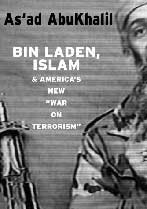
"As'ad AbuKhalil, a Lebanese politics lecturer at the University of California, criticised both channels in his popular blog site. "(Al Jazeera) is way too sombre and way too melancholic ... just as Al Arabiya's coverage is way too celebratory and fake," he wrote."
John Burns is the New York Times bureau chief in Baghdad. He was the most enthusiastic cheerleader of the war, and went to the George H.W. Bush library in Texas to praise Bush's war, and got teary eyed even. Here, he provides an after-the-fact, hedge-your-bet defense or pretext for US behavior. Now, after the execution--like every other element of US policy--when the US realized that it did yet another foolish thing, it wants to distance itself from what happened, only after seeing the reactions in the region. Look at Burns: "Iraqi and American officials who have discussed the intrigue and confusion that preceded the decision late on Friday to rush Mr. Hussein to the gallows have said that it was the Americans who questioned the political wisdom — and justice — of expediting the execution, in ways that required Prime Minister Nuri Kamal al-Maliki to override constitutional and religious precepts that might have assured Mr. Hussein a more dignified passage to his end." So the American officials told Burns that American officials questioned the wisdom? So according to Burns the US did not have the power to stop the execution because they have utmost respect for the "sovereignty" and "independence" of Iraq. OK, Mr. Burns. That makes total sense. I am not at liberty--not yet anyway--to discuss how the New York Times fortress in Baghdad is run and managed.
I wrote before on the Qur'anic word "jahannam" (hell) in a post about those who shouted "Ila Jahannam" to Saddam at the time of his execution. Let me correct myself. Jahannam is of old Hebrew origin, another word for hell in the Qur'an (jahim) is of old Ethiopic origin. Ibn Mandhur in Lisan Al-`Arab notes that Jahannam is of `ajami (non-Arabic) origin and thinks that the fact that is never preceded by Al At-Ta`rif as evidence. But even Ibn Mandhur notes that some Arab linguists believe that Jahannam is of old Arabic origin from a word that means "of the deep bottom". And two of the seven names of hell in the Qur'an are of Syriac origin: "sa'ir" and "saqar." Saqar is least known and least used today. But it appears some 5 times in the Qur'an, as in:
سَأُصْلِيهِ سَقَرَ {26}
وَمَا أَدْرَاكَ مَا سَقَرُ {27}
لَا تُبْقِي وَلَا تَذَرُ {28}
لَوَّاحَةٌ لِّلْبَشَرِ {29}
عَلَيْهَا تِسْعَةَ عَشَرَ {30}
(I don't have time to translate, especially the interesting reference to the number 19 in the last ayat but avoid the apologetic and inaccurate translation of Yusuf Ali, which is the most widely used translation by Muslims here in the US. When I used to read that Surah as a kid, that section scared me.)

Yesterday, when I was on Aljazeera, the host, Abdur-Rahim Fuqara' (the new bureau chief for Al-Jazeera in Washington, DC who I have never met before), interrupted me at one point to say something to the effect that "it is clear that you are not a fan of the Bush administration but we have people with different views on." It sounded as if he was apologizing to the Bush administration for having me on. Most unusual. I mean, would he have interrupted a guest to say: "it is clear that you are an apologist of the Bush administration but we have different people on"?
Introduction to Lebanese journalism. Lebanese columnist Samir `Atallah has been working for Ash-Sharq Al-Awsat for 19 years. The newspaper is part of the media empire of Prince Salman bin `Abdul-`Aziz. He was interviewed on the cultural program, Rawafid, on AlArabiya. He was asked about the person who had the most influence on him throughout his travels and journeys. He said without hesitation: Prince Salman bin `Abdul-`Aziz. See why the Lebanese journalists are widely appreciated in the Arab world? Do you see their skills?
Azharite and Wahhabi clerics are mad at Qadhdhafi because he suggested that Christians and Jews should be permitted to roam the Ka`bah.
The Jordanian King shows that he cares: "Jordanian King Abdullah II has complained of bovine odors coming from the Israeli side of the frontier along the countries' shared southern border,Israel's environment minister said Monday." (thanks Kim and John)
Subscribe to:
Posts (Atom)